
 Hotel Owners / Asset Managers
 Revenue Managers
 Revenue Management Consultants
 Management Companies
 Hotel Brands
 Independent Hotels
 Economy and Budget Hotels
 Integration Partners
 Blog
Blog FAQ’s
FAQ’s Case Studies
 Events
High-demand periods represent make-or-break moments for hotel revenue. Whether it’s a major holiday weekend, a city-wide conference, or peak tourist season, these windows of opportunity can account for a disproportionate share of annual revenue.
Get your hotel pricing right during these periods, and you’ll see healthy profit margins and satisfied guests. Get it wrong, and you’ll either leave substantial money on the table or watch potential bookings disappear to competitors.
These periods don’t come around often, which makes pricing mistakes particularly costly. This concentration of opportunity means that common pricing mistakes during high-demand windows create ripples that affect your bottom line for months.
Common Hotel Pricing Mistakes During High-Demand Periods
Understanding where hotels go wrong during peak periods is the first step toward better revenue performance. These mistakes range from underpricing to poor channel management, and each one chips away at your bottom line.
Failure to Adjust Prices for Increased Demand
One of the most expensive hotel pricing mistakes is not raising rates when demand increases. This often happens when hoteliers rely on intuition rather than data, or when they’re hesitant to raise prices for fear of appearing opportunistic.
When you underprice during peak demand, you’re essentially giving away revenue that guests are willing to pay. If your hotel fills up weeks in advance at rates only slightly higher than your low-season pricing, you’ve likely left money on the table.
Guests who book during high-demand periods often have less price sensitivity. They’re committed to being in your market during specific dates—attending a wedding, catching a concert, or participating in a business event that can’t be rescheduled.
Consider what happens when a hotel with 100 rooms charges $150 per night during a festival weekend when the market rate is $250. That’s $10,000 in lost revenue per night, or $30,000 over a three-night weekend.
Overpricing and Guest Alienation
Just because demand is high doesn’t mean guests will pay any price. They’re still comparing options, reading reviews, and evaluating whether your rates align with the value you deliver.
The damage from overpricing can be severe if you maintain inflated rates too long. Empty rooms during high-demand periods are opportunities you can never recover. Unlike physical products that can be sold later, unsold hotel rooms represent permanent revenue loss.
Smart hoteliers monitor competitor pricing throughout high-demand periods and adjust their positioning accordingly. This doesn’t mean matching the lowest rate in your market—it means understanding where your property sits and pricing appropriately for your position.
Lack of Dynamic Pricing Strategy
Perhaps the most common of all pricing mistakes is maintaining static rates that don’t respond to real-time market conditions. Hotels that set their peak season rates once and leave them unchanged miss opportunities to optimize revenue as conditions shift.
Demand during high-demand periods is rarely uniform. Booking patterns change, cancellations occur, new groups enter the market, and competitor behavior shifts.
Modern revenue management relies on continuous monitoring of several key factors:
- Real-time booking pace compared to historical patterns
- Competitor rate changes across multiple channels
- Cancellation trends that might indicate softening demand
- New events or circumstances affecting your market
- Weather forecasts that could impact guest behavior
Hotels that ignore these signals make decisions based on outdated assumptions rather than current market realities.
Lack of Segmentation and Market-Specific Pricing
Not all guests booking during high-demand periods have the same needs, behaviors, or willingness to pay. Applying uniform hotel pricing across different customer segments leaves revenue on the table.
Corporate travelers booking during a conference week have different patterns than leisure travelers planning a vacation months in advance. Last-minute bookers often have higher urgency and lower price sensitivity than early planners.
Effective segmentation during high-demand periods includes early booking discounts that lock in revenue, last-minute premium pricing that captures urgent demand, and group-specific rates that encourage multi-room bookings. Direct booking incentives reduce distribution costs while package offerings appeal to specific segments willing to pay more for added value.
Failure to Use Length-of-Stay Controls
Length-of-stay restrictions are an underutilized tool for optimizing revenue during high-demand periods. Many hotels focus exclusively on nightly rates while overlooking how minimum stay requirements can dramatically improve revenue performance.
Without minimum stay controls, your hotel might book a one-night stay on the peak night of a holiday weekend, blocking that room from a guest willing to book three nights at a premium rate.
Research from Cornell University’s Center for Hospitality Research found that hotels implementing minimum length-of-stay restrictions during constrained demand periods showed improved RevPAR performance compared to those without such controls.
The mistake many hotels make is implementing stay controls too aggressively or too early, potentially deterring bookings when demand hasn’t fully materialized. The key is monitoring booking pace and adjusting controls dynamically as you get closer to the arrival date.
Poor Distribution Channel Management
The complexity of modern hotel distribution creates unique pricing challenges during high-demand periods. Hotels sell through multiple channels—their own website, online travel agencies, global distribution systems, and wholesale operators.
Rate parity issues become particularly problematic during peak periods. If your hotel shows different rates on Booking.com versus your direct website, it confuses potential guests and damages trust.
The challenge intensifies because different channels have different commission structures. OTAs typically charge 15-25% commission, while direct bookings cost only your technology and marketing expenses.
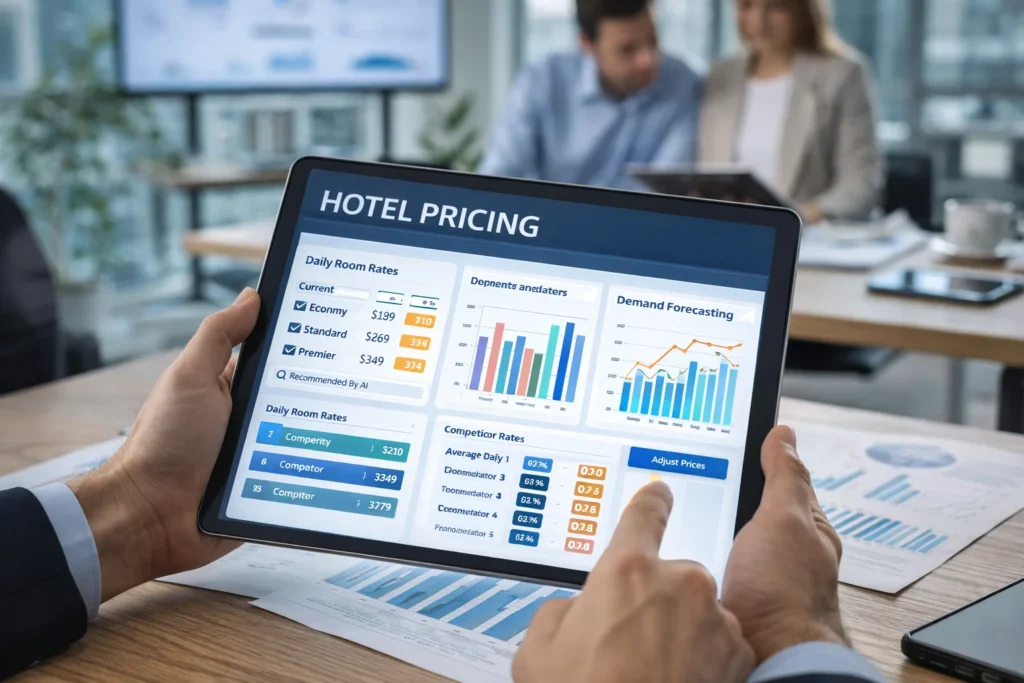
Best Practices to Avoid Hotel Pricing Mistakes During Peak Periods
Avoiding these common pricing mistakes requires a combination of technology, strategy, and active management. Here’s what works.
Make Real-Time Adjustments Standard Practice
The days of setting rates once per week or month are over. During high-demand periods, conditions change rapidly enough that daily or even multiple-daily rate adjustments make a meaningful difference.
Modern revenue management systems can automate these adjustments based on predefined rules and real-time data. This allows hotels to respond to market conditions as they unfold rather than reacting after the fact. When a competitor drops rates, when booking pace accelerates, or when cancellations spike, automated systems can adjust pricing immediately.
Build Segment-Specific Strategies
Develop distinct pricing approaches for your major guest segments. Corporate bookers, leisure travelers, groups, and special event attendees all have different booking behaviors and price sensitivities.
Creating targeted rate plans and packages for each segment allows you to capture maximum value from your entire guest mix. This segmentation should extend beyond just rates to include packaging strategies.
A family booking for spring break might respond well to a package including breakfast and pool passes, while a conference attendee values fast WiFi and late checkout more than food and beverage inclusions.
Use Stay Controls as Revenue Tools
Apply minimum and sometimes maximum stay requirements to shape demand patterns that optimize total revenue rather than just nightly rates. Start with conservative restrictions and tighten them as demand materializes.
Monitor booking pace against your forecast to ensure controls aren’t blocking legitimate demand prematurely. Stay controls should serve revenue optimization, not function as arbitrary rules. If you’re not filling rooms with the minimum stay requirement in place, relax the restriction rather than letting rooms sit empty.
Keep Channel Rates Consistent
Your rates should appear consistent across all distribution channels where guests can compare them directly. Use direct booking incentives that add value without breaking rate parity—things like:
- Free breakfast or parking vouchers
- Room upgrades for direct bookers
- Late checkout privileges
- Welcome amenities or resort credits
Close OTA availability when direct demand is strong enough to fill the hotel without paying distribution commissions.
Watch Your Competition Closely
During high-demand periods, check competitor rates at least daily. Understand where your property sits in the competitive landscape and adjust pricing to maintain your intended market position.
This doesn’t mean always matching competitors. It means knowing what they’re doing and making conscious decisions about your positioning relative to their pricing. If you’re a mid-tier hotel trying to charge luxury rates during a busy weekend, you’ll likely struggle to maintain occupancy.

Turn Hotel Pricing Mistakes Into Revenue Wins
The common thread connecting these pricing mistakes is a reactive rather than proactive approach to revenue management during high-demand periods. Hotels that wait for demand to find them, that set rates once and hope for the best, or that treat all booking opportunities the same will consistently underperform.
Success requires preparation before demand arrives, active monitoring while it’s happening, and a willingness to adjust as conditions change. It means understanding your market deeply enough to know how guests book, what they value, and what they’re willing to pay under different circumstances.
Avoiding these mistakes doesn’t require massive investments in technology or huge revenue management teams. It requires commitment to data-driven decisions, willingness to adjust pricing dynamically, and recognition that different guests and situations call for different approaches. Properties that address these common pricing mistakes position themselves to capture the full revenue potential that high-demand periods offer.