
According to CoStar/STR U.S. Hotel Performance Data, July 2025, average U.S. hotel occupancy reached 68.2% in July 2025, with top markets like New York City hitting 85.2%. For most hotel operations, peak season is the single largest revenue opportunity of the year.
Yet that opportunity is also where profit most easily erodes. Underprepared hotels fill rooms at rates that should be higher, burn through staff without adequate coverage, and generate the guest experience failures that produce negative reviews precisely when those reviews carry the most weight.
Peak season for hotels is the period of highest demand for a given property, driven by favorable weather, local events, holidays, and seasonal travel patterns. The timing varies: midsummer for beach resorts, midwinter for ski properties, spring and fall for corporate-heavy urban hotels. But the preparation requirements are consistent: pricing calibrated to capture maximum rate, operations staffed for volume, and the booking funnel optimized to convert demand before it flows to a competitor.
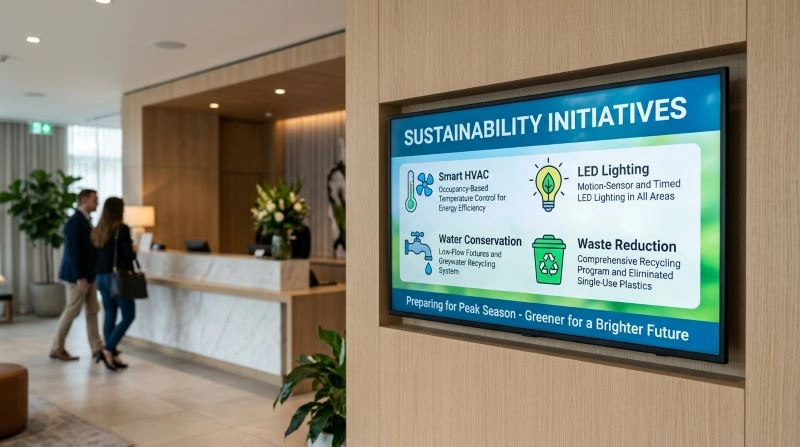
This article covers five strategies for capturing peak demand at full profitability, and the three most costly mistakes to avoid.
What Should Hotels Expect During Peak Season?
Peak season concentrates the highest occupancy, the strongest pricing power, and the most operational pressure into the same period. Small failures that are manageable during a slow week become compounding problems during a full house.
Hotels leveraging automated revenue management systems often see sustained RevPAR increases compared to properties relying on manual updates. This performance gap is primarily driven by a precision pricing strategy rather than just higher occupancy, making it a powerful lever for protecting margins regardless of broader market conditions.
What Are the Main Challenges of Peak Season?
Three challenges consistently undermine peak season profitability. Understanding them before the season begins is what separates prepared operators from reactive ones.
- Overbooking risk: Without real-time channel inventory sync, overselling leads to walked guests, compensation costs, and reputational damage that persists long after the season ends
- Understaffing: According to the American Hotel and Lodging Association (AHLA) survey, February 2025, 65% of U.S. hotels reported staffing shortages, with housekeeping and front desk identified as the most critical gaps. During peak, those gaps produce guest-facing failures that appear directly in post-stay reviews
- Underpricing: Filling rooms below market rate is the most invisible mistake. It only appears in the post-season P&L when the opportunity has already passed
5 Key Strategies to Prepare for Hotel Peak Season Without Losing Profit
1. Calibrate Your Pricing Strategy with Dynamic Pricing
Dynamic pricing is the most direct lever for maximizing peak season revenue. Static seasonal rates set months in advance cannot account for real-time demand surges, competitor sell-outs, or compression events that develop closer to arrival. Hotels that automate rate adjustments based on live demand signals consistently outperform those holding fixed peak rates.
During peak season, demand is inelastic. Guests committed to a destination in a specific window will pay the market rate. Hotels that do not capture that rate are not being cautious; they are being undercompetitive.
Implementation steps for peak season dynamic pricing:
- Set rate floors by room type tied to your actual cost per occupied room (CPOR), the minimum the system is permitted to charge
- Configure minimum length-of-stay (MLOS) restrictions on your highest-demand nights to prevent short-stay bookings from displacing higher-revenue multi-night reservations
- Review booking pace daily against the same-period prior year and trigger rate escalations when pace runs ahead of forecast
See how Ramsi’s agentic AI manages peak season dynamic pricing automatically for independent hotels and management companies.
2. Staff for Volume Before the Season Starts
Operational failures during peak season are almost always staffing failures in disguise. Housekeeping delays create check-in backlogs. Understaffed front desks begin a guest’s stay on a negative note. Food and beverage shortages generate the complaints that appear in post-stay reviews, and peak-season reviews carry far more visibility than those written in January.

Effective peak season staffing preparation requires:
- Forecasting occupancy by day and shift at least 8 to 10 weeks before peak begins, using booking pace data and prior-year actuals
- Recruiting and onboarding seasonal staff early enough for full training before the season starts, not during it
- Cross-training permanent staff across roles so internal coverage gaps do not become guest-facing failures
The staffing investment before peak season pays back in satisfaction scores and the positive reviews that carry into the shoulder booking period.
3. Ensure Your Website and Booking Systems Are Conversion-Ready
Direct booking traffic surges during peak season. According to SiteMinder’s 2025 Hotel Booking Trends Report, via PhocusWire, hotel websites generated the highest average value per booking ($516) when compared with other channels, and hotels that invest in website optimization and frictionless booking experiences consistently see higher-value bookings and deeper guest connections.
Before peak season:
- Test booking engine speed and mobile usability: even a one-second load delay meaningfully reduces conversion rates
- Verify real-time inventory sync between your PMS and all distribution channels; a lag creates overbooking risk or missed sales on high-demand dates
- Confirm your best available rate is displayed accurately on your direct channel; rate disparity during peak pushes guests toward higher-commission OTA bookings
4. Secure Advance Bookings with Early-Bird Packages
Advance bookings serve two critical functions: they reduce underperformance risk and give your revenue management system accurate pace data to inform rate decisions as the season approaches.
Early-bird packages should offer value rather than rate reduction. A 10% discount on the peak rate destroys the margin. A bundle that adds a food and beverage credit, breakfast, or early check-in delivers perceived value without eroding ADR. Structure them with two core principles:
- Set a 60 to 90-day deadline with a rate ladder that steps up as the booking window closes, enforced with non-refundable or restricted cancellation terms
- Promote them on your direct channel and to your existing guest database before releasing inventory to OTAs
5. Invest in Guest Experience to Drive Reviews and Loyalty
Peak season generates more guest reviews than any other period. A concentrated spike of positive reviews after a well-executed season materially strengthens OTA ranking and rate-conversion performance for the 12 months that follow.
Three guest experience investments with the highest peak season ROI:
- Pre-arrival personalization: A brief communication 48 to 72 hours before arrival, confirming preferences, reduces friction and sets a welcoming tone before the guest arrives on property
- Proactive service recovery: Empower staff to resolve complaints immediately with modest gestures, such as a food and beverage credit, an available upgrade, or a late checkout. The cost of a resolved complaint is a fraction of a one-star review visible to thousands of future guests
- Post-stay review request: A follow-up email within 24 hours with a direct review link converts satisfied guests into published feedback at significantly higher rates than passive expectation
What Are the Most Costly Mistakes During Hotel Peak Season?
How Overbooking and Underpricing Undermine Peak Profitability
A walk-in guest during peak season, when comparable alternatives are scarce, is rarely recoverable. If overbooking is used deliberately as a yield tactic, it requires real-time channel inventory sync, trained walk procedures, and a compensation policy generous enough to convert the incident into something other than a guaranteed negative review.

Underpricing is the subtler and more common mistake. The temptation to fill quickly early in the booking window leads properties to accept rates below what the market will clear. Properties that hold rate through the booking curve consistently outperform those that front-load at discounted rates: 95% occupancy at $150 ADR generates less net revenue than 80% occupancy at $180 ADR, and costs more to operate.
How Operational Inefficiency Creates Hidden Profit Leaks
Poor interdepartmental coordination creates costs that do not appear on the revenue statement but erode profitability in real terms. Housekeeping delays push check-in past contracted times. Food and beverage teams not briefed on expected arrivals run short of breakfast items. Maintenance issues that are minor in a half-full hotel become urgent when every room is occupied.
The solution is pre-season alignment: shared occupancy forecasts across departments and clear escalation protocols for service failures. Learn how Ramsi’s platform connects performance data across hotel operations to support smarter peak season planning.
Start Peak Season Preparation Now, Not When Bookings Open
The difference between a peak season that meets its revenue potential and one that underperforms is rarely what happens during the season. It is what was built before it. Pricing structures, staffing plans, booking engine readiness, early-bird packages, and guest experience protocols must be in place before demand arrives.
Every rate decision and every guest interaction during peak weeks carries outsized financial and reputational weight. The five strategies here work together to convert peak demand into peak profitability, not just peak busyness. Maximizing revenue and delivering exceptional guest service are not competing objectives during peak season; they are mutually reinforcing ones. Hotels that hold rate, staff properly, and execute on experience consistently outperform not just during peak season but in the shoulder reviews and repeat bookings that follow.
Want your hotel fully prepared for peak season before demand arrives? Book a free demo with Ramsi and see how agentic AI can optimize your pricing, inventory, and distribution automatically.
Frequently Asked Questions
When is peak season for hotels?
It varies by property type: beach and resort hotels peak in summer (June to August), ski properties in winter (December to February), and urban conference hotels follow the corporate events calendar, typically peaking in spring and fall.
How can I forecast demand for peak season?
Start with the same-period prior-year occupancy, booking pace, and pickup velocity. Overlay the local event calendar and compare forward bookings against prior-year on-the-books at the same point in the booking window.
How far in advance should I start preparing for hotel peak season?
For most properties, begin three to four months out: launch rate strategy and early-bird packages 90 days before peak; begin staffing recruitment 8 to 10 weeks before the season starts; complete booking engine and channel sync audits 6 to 8 weeks out. Waiting until bookings open means reacting to demand rather than shaping it.
What is the best way to improve guest experience during peak season?
Focus on the three moments that generate the most reviews: arrival, service recovery, and departure. Pre-arrival communication reduces check-in friction; empowered staff resolve complaints before they become reviews; a post-stay email with a direct review link within 24 hours converts satisfied guests into published feedback at significantly higher rates than passive approaches.