
 Hotel Owners / Asset Managers
 Revenue Managers
 Revenue Management Consultants
 Management Companies
 Hotel Brands
 Independent Hotels
 Economy and Budget Hotels
 Integration Partners
 Blog
Blog FAQ’s
FAQ’s Case Studies
 Events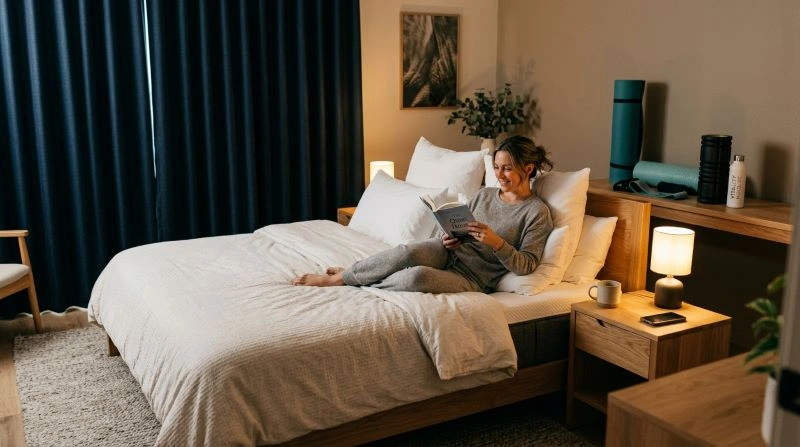
According to the Hospitality Market Report 2026, international tourist arrivals are projected to surpass 1.55 billion for the first time in history this year, and the global hospitality market is forecast to grow from $5.52 trillion in 2025 to $5.82 trillion in 2026. Yet EHL researchers are explicit: growth alone does not guarantee success. The market is becoming more competitive, more segmented, and more demanding – and properties that fail to evolve risk losing ground even as the industry expands.
Hotel industry trends are shifts in guest behavior, technology, and market conditions that reshape how properties attract and retain guests. Mobile check-in, for example, is not just a tech upgrade – it changes staffing, satisfaction scores, and distribution economics together. This article covers the eight trends with the most direct impact on profitability in 2026.
Quick Reference: 8 Hotel Industry Trends for 2026
| Trend | Primary Revenue Impact | First Action |
| Sustainability | Lower CPOR, stronger ESG asset value | Smart HVAC and lighting controls |
| AI Personalization | Higher upsell conversion, repeat bookings | Connect PMS to CRM |
| Wellness | Longer stays, rate premium | Audit sleep environment, add wellness package |
| IoT and Smart Tech | Improved satisfaction, lower maintenance cost | Prioritize smart HVAC and lighting |
| Contactless Experience | Better NPS, reduced front desk load | Mobile check-in and digital keys |
| Remote Work-Friendly | Midweek occupancy from the bleisure segment | Fix the in-room workspace and Wi-Fi |
| Experience Travel | Higher booking value, organic social reach | Build 2-3 local partnerships |
| Influencer and UGC | Direct booking traffic, lower acquisition cost | Launch branded hashtag |
What Are the 8 Key Hotel Industry Trends Shaping 2026?
1. Sustainability Moves from Message to Metric
Eco-friendly hotel practices are no longer a differentiator—they are a baseline expectation. According to the NYU Stern Center for Sustainable Business, sustainability-marketed products have consistently grown faster than conventional goods. Their research shows these products accounted for nearly one-third of all consumer growth in recent years, despite having a much smaller total market share.
This expansion during a period of inflation confirms that consumer commitment to sustainability is durable. For hoteliers, this shift proves that guests increasingly view “green” initiatives as a standard indicator of a modern, high-quality property.
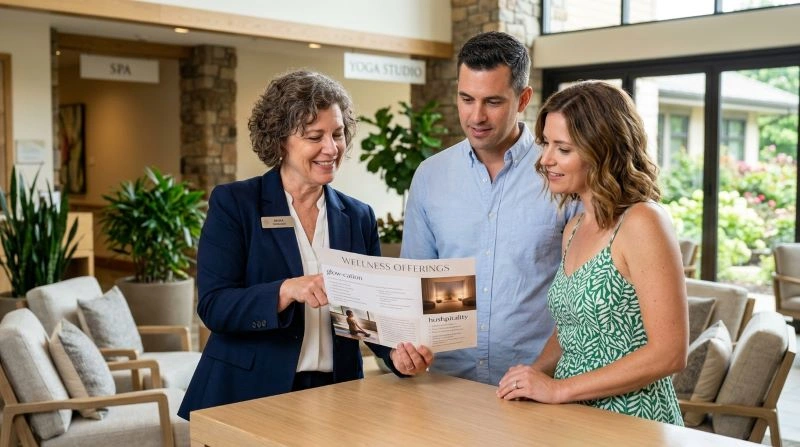
In 2026, ESG performance is reviewed by investors, brand auditors, and OTA platforms. Energy consumption accounts for roughly 60% of a hotel’s carbon footprint and a similar share of utility expenditure – making it the highest-ROI starting point for any sustainability program.
How to adapt:
- Install occupancy-based HVAC and lighting controls for the fastest payback and most visible guest benefit.
- Pursue green certification (LEED, Green Key, EarthCheck) for third-party credibility that increasingly influences booking decisions.
2. AI-Driven Personalization Becomes the New Standard
Artificial intelligence has moved out of pilot programs and into daily hotel operations. Hotels are using AI to forecast staffing, automate service requests, optimize maintenance, support revenue decisions, and – most visibly – personalize the guest experience at scale. AI platforms now create what operators are calling Intelligent Guest Profiles: consolidated records of a guest’s preferences, behavior, and history that inform every interaction.
A hotel that cannot recall a returning guest’s room preferences is not neutral – it is behind the standard the market has already set. Guests across all price points now expect hotels to remember their preferences, and properties using AI-driven personalization are seeing measurable improvements in satisfaction, upsell conversion, and repeat bookings.
How to adapt:
- Connect your PMS to a CRM that consolidates booking history, in-stay service requests, and post-stay feedback into a single guest record
- Use that profile to trigger pre-arrival communications tailored to stated preferences (room type, floor, dietary needs)
- Automate relevant upsell offers based on the guest’s stay purpose and history, rather than sending the same upgrade prompt to every arrival
3. Wellness Is Now Built Into the Stay, Not Bolted On
The wellness travel market is expanding rapidly, and its influence on the hotel industry is deepening. The current trends in the hotel industry show that wellness in 2026 is not a spa menu – it is an organizing principle for the entire stay. Guests are seeking environments that promote sleep quality, mental clarity, movement, and nutrition. Hotels embedding these ideas into room design, F&B programming, and service culture are seeing longer average stays and stronger emotional loyalty, particularly in premium segments.
New formats are emerging: sleep-optimized suites with circadian lighting, “glow-cation” skin and hydration packages, and “hushpitality” retreats for digital detox. One in four travelers sought unique wellness experiences in 2025, per the Hilton 2025 Trends Report.
How to adapt:
- Audit your room against what wellness travelers prioritize: blackout curtains, quiet HVAC, a healthy breakfast, and in-room fitness resources
- Build at least one wellness package and list it prominently on your direct booking engine and OTA listing – you do not need a full spa to compete
4. Smart Hotel Technology: IoT and Automation
Smart home technology is no longer a futuristic novelty; it is becoming a standard household feature. As smart device adoption becomes the norm, guests are increasingly accustomed to managing their environments through integrated technology.
Smart room features – occupancy-based lighting, voice-controlled temperature, predictive maintenance sensors – improve the guest experience and operational efficiency simultaneously. Predictive maintenance alone reduces unplanned downtime and the negative reviews that accompany broken equipment and uncomfortable rooms.
How to adapt:
- Prioritize smart HVAC and lighting first – they offer the fastest ROI and the most visible guest benefit
- Evaluate voice assistants and in-room sensors based on your property type; the best technology in 2026 is the kind guests barely notice because it removes friction without a learning curve
5. Contactless and Mobile-First Experiences Are Now Baseline
Yes. Mobile check-in, digital room keys, and contactless payment have shifted from post-pandemic measures to baseline expectations. These features now influence booking decisions – particularly among millennial and Gen Z travelers, who are significantly less tolerant of check-in friction.
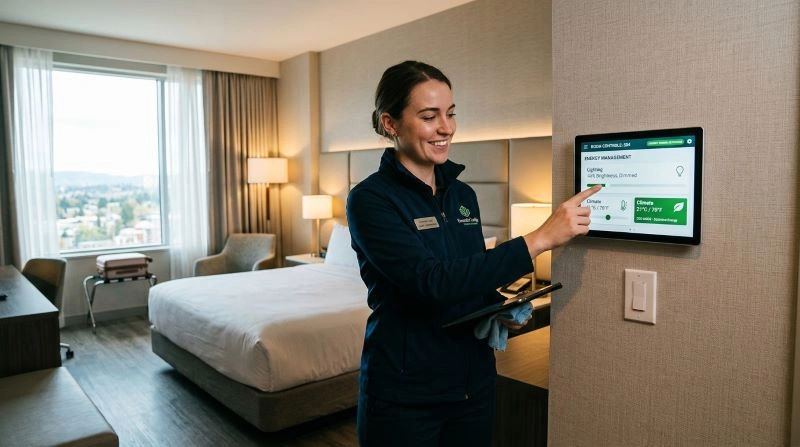
Contactless check-in reduces front desk congestion, enables earlier room access, and frees staff for service rather than administrative tasks. Properties that have implemented mobile-first check-in consistently report improved NPS scores.
How to adapt:
- Implement mobile check-in and digital room keys – most modern PMS platforms include this natively
- Send pre-arrival instructions explaining the process; adoption improves dramatically when guests know what to expect before they arrive
6. Hybrid and Remote Work-Friendly Hotels
Remote work has stabilized as a permanent workforce feature. The bleisure market – business trips extended with leisure days – is expected to double by 2032, and hotels that serve this segment are capturing midweek occupancy they previously could not reach without discounting.
The minimum requirement is reliable Wi-Fi and a comfortable workspace. Properties capturing real revenue from this segment go further: co-working areas, hourly-bookable meeting rooms, and flexible multi-week packages.
How to adapt:
- Audit in-room workspace and connectivity first – a wall-facing desk and inconsistent Wi-Fi will lose this segment, regardless of how the offer is packaged
- Fix the fundamentals, then build a work-from-hotel package with workspace access, daily F&B credit, and a clear multi-week rate
7. Experience-Driven Travel: Guests Want a Story, Not Just a Stay
Bain and Altagamma research confirms that luxury consumers prioritized experiences over possessions in 2025 – and this is not a luxury-only shift. Travelers across segments want stays that connect them to the destination’s culture, food, and community, and they are willing to pay a premium for properties that deliver it.
Experience packages carry higher margins than room-only rates and generate the memories that produce repeat visits and organic social sharing.
How to adapt:
- Identify two or three local operators – a food tour, a nature guide, an artisan studio – and build them into bookable packages on your direct website
- Promote them on your OTA listing as differentiators and reference them in pre-arrival communications, not just in a room brochure
8. Influencer Marketing and User-Generated Content Drive Bookings
Direct bookings remained in the top three channels across 90% of markets in 2025 (SiteMinder), and a key driver of that traffic is social discovery – what travelers see on Instagram or TikTok before reaching a booking engine. UGC and influencer partnerships are now primary demand tools for independent properties that cannot match branded hotels on paid media.
A well-placed creator collaboration can generate bookings that outperform equivalent paid media spend – with reusable content assets as a bonus.
How to adapt:
- Start with UGC: create a branded hashtag, identify a photogenic corner of your property, and add a sharing prompt to your post-stay email
- When evaluating influencer partnerships, prioritize engagement rate over follower count – a creator with 15,000 engaged followers in your target segment outperforms one with 200,000 passive ones
What Should Hotels Expect from the Hospitality Industry Beyond 2026?
Technology and the Human Touch Will Coexist
The broader direction of the latest trends in the hotel industry points toward a future where technology handles the transactional and analytical work of hospitality, freeing human staff to focus on what technology cannot replicate: empathy, recovery, and the kind of genuine warmth that creates a loyal guest.
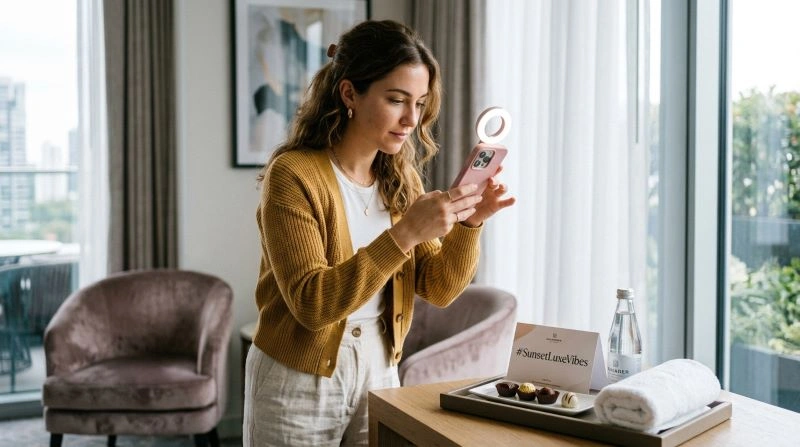
Front desk teams will be valued less for processing speed and more for their ability to read a situation, resolve a problem graciously, and add moments of unexpected connection. That shift requires investment in staff training alongside investment in technology.
Sustainability and Personalization Will Define Competitive Position
The hotels with the strongest competitive position in the next decade will be those that have embedded sustainability and personalization as disciplines, not features. Both will increasingly be audited, expected, and competitively required. Building them now, while they remain differentiators, is far less costly than implementing them under pressure.
Act on What the Market Is Already Telling You
The hotel industry trends shaping 2026 are already visible in guest behavior and booking data. Review your current strategy against each of the eight. Identify where your property is ahead, where it is behind, and where a targeted investment produces the clearest return. Start with one or two priorities, measure the impact, and build from there.
Want to see how agentic AI can help your property stay ahead of market shifts automatically? Book a free strategy session with Ramsi and find out where your revenue and guest experience strategy has room to grow.
Frequently Asked Questions
What are the key benefits of incorporating sustainability in hotels?
Sustainability lowers operating costs, strengthens asset value under ESG frameworks, and directly influences booking decisions. Current market trends show that sustainable products and services are growing significantly faster than conventional alternatives, evidence that eco-conscious consumer behavior is commercially meaningful, not just reputational.
How can hotels personalize guest experiences using AI?
Start by connecting your PMS to a CRM that consolidates booking history, in-stay requests, and post-stay feedback into a unified guest profile. Use that data to trigger personalized pre-arrival messages, relevant upsell offers, and loyalty recognition at check-in. Even modest AI integration yields measurable improvements in satisfaction and return-booking rates.
How can hotels improve their contactless services?
Start with mobile check-in and digital room keys – most modern PMS platforms support both. Pair them with pre-arrival communication explaining the process, which dramatically improves adoption. Add contactless payment at all guest-facing points and ensure real-time service requests can be handled through an app or messaging platform.
What are hybrid work-friendly hotels, and why are they important?
They cater to remote workers and digital nomads with reliable Wi-Fi, quality workspaces, co-working areas, and flexible stay options. The bleisure market, business trips combined with leisure days, is expected to double by 2032, making this segment a significant weekday occupancy opportunity.
What is the impact of experience-driven travel on hotel bookings? It increases average booking value, extends the length of stay, and generates social content that drives future demand. One in four travelers actively sought unique experiences when choosing accommodations in 2025 (Hilton Trends Report). Hotels that package local experiences consistently outperform room-only competitors on RevPAR and satisfaction scores.