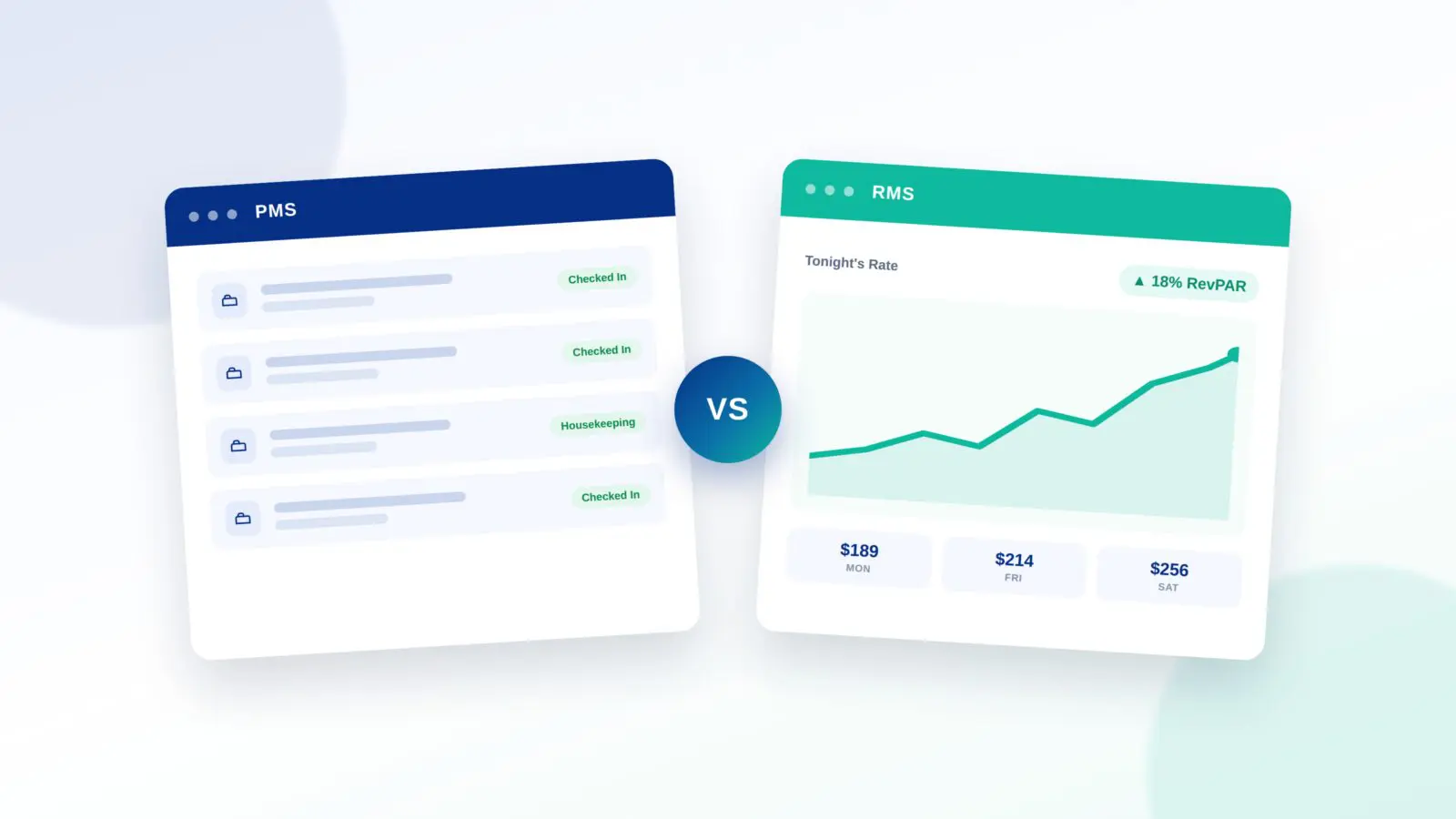
If you run an independent or boutique hotel, you’ve probably had this conversation at least once: someone on your team says “we already have a PMS, why do we need an RMS too?” It’s a fair question — and an easy one to get wrong, because the two systems sound similar, often show up in the same sales pitch, and sometimes even get used interchangeably in vendor marketing. They’re not the same thing, though, and knowing the difference is the first step to figuring out whether your property is missing a piece of its tech stack.
What a PMS actually does
A property management system (PMS) is the operational hub of your hotel. It’s where reservations live, where front desk staff check guests in and out, where housekeeping status gets tracked, and where folios and payments get processed. Popular examples include Cloudbeds, Mews, Stayntouch, and Oracle Opera. If your PMS went down for an afternoon, you’d feel it immediately at the front desk.
What a PMS is not built to do is tell you what to charge for a room tonight versus three weeks from now. It stores your rates — it doesn’t decide them.
What an RMS actually does
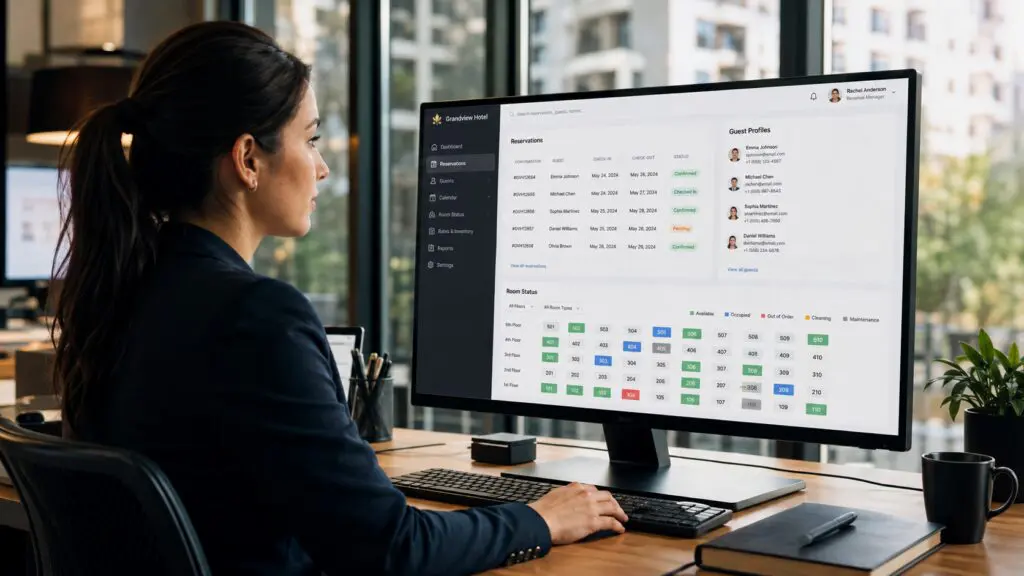
A revenue management system (RMS) is the pricing brain. It looks at demand signals — booking pace, competitor rates, local events, seasonality, even weather — and recommends or automatically sets the price for each room type, each night, based on what the market will actually support. A good RMS is reacting to those signals constantly, not just when someone remembers to check a spreadsheet.
Where a PMS answers “who’s staying here and when,” an RMS answers “what should we be charging them.”
The key differences, side by side
| PMS | RMS | |
| Core job | Operations: reservations, check-in/out, housekeeping, billing | Pricing: demand forecasting, rate optimization |
| Data it uses | Guest and reservation records | Market signals — competitor rates, events, booking pace, seasonality |
| Output | A record of what happened | A recommendation (or automated action) for what to charge |
| How often it “acts” | As reservations come in | Continuously — a good RMS re-prices multiple times a day |
| Who feels it if it’s missing | Front desk, housekeeping | Revenue, ownership — usually shows up as underpriced or overpriced rooms |
So why do you need both?

Because they solve different problems. A PMS without an RMS means someone on your team is still setting rates manually — usually based on gut feel, a weekly glance at competitor sites, or “what we charged last year plus a bit.” That works, but it doesn’t scale, and it’s almost never fast enough to catch a demand spike (or a soft patch) in real time. Most independent and boutique hotels don’t have a dedicated revenue manager checking rates six times a day — and that’s exactly the gap a purpose-built RMS is meant to close.
This isn’t theoretical. Yorktown Beach Hotel replaced manual weekly pricing with an automated RMS layered on top of their existing PMS and saw revenue grow 21% year-over-year, with rates updating six times a day instead of once a week. Silver Collection Hotel automated pricing entirely and saw a 70% rate lift on event nights they would previously have caught too late — while getting 5–8 hours a week back that used to go into manual rate-checking.
Where Ramsi fits in
Ramsi is an RMS, not a PMS — and it’s built specifically for independent and boutique hotels that don’t have (and don’t want to hire) a full-time revenue management team. It connects to the PMS you already run — Cloudbeds, Mews, Stayntouch, Oracle Opera, Infor HMS, and others — and handles the pricing side: watching the market, adjusting rates up to six times a day, and giving you the choice of fully automated, review-and-approve, or manual control.
You don’t have to replace your PMS to get this. You just have to add the piece it was never built to do.
Curious what better pricing would actually be worth to your property? Run a free revenue analysis — Only takes a few minutes and shows you where you’re likely leaving money on the table.