Last updated: September 24, 2026
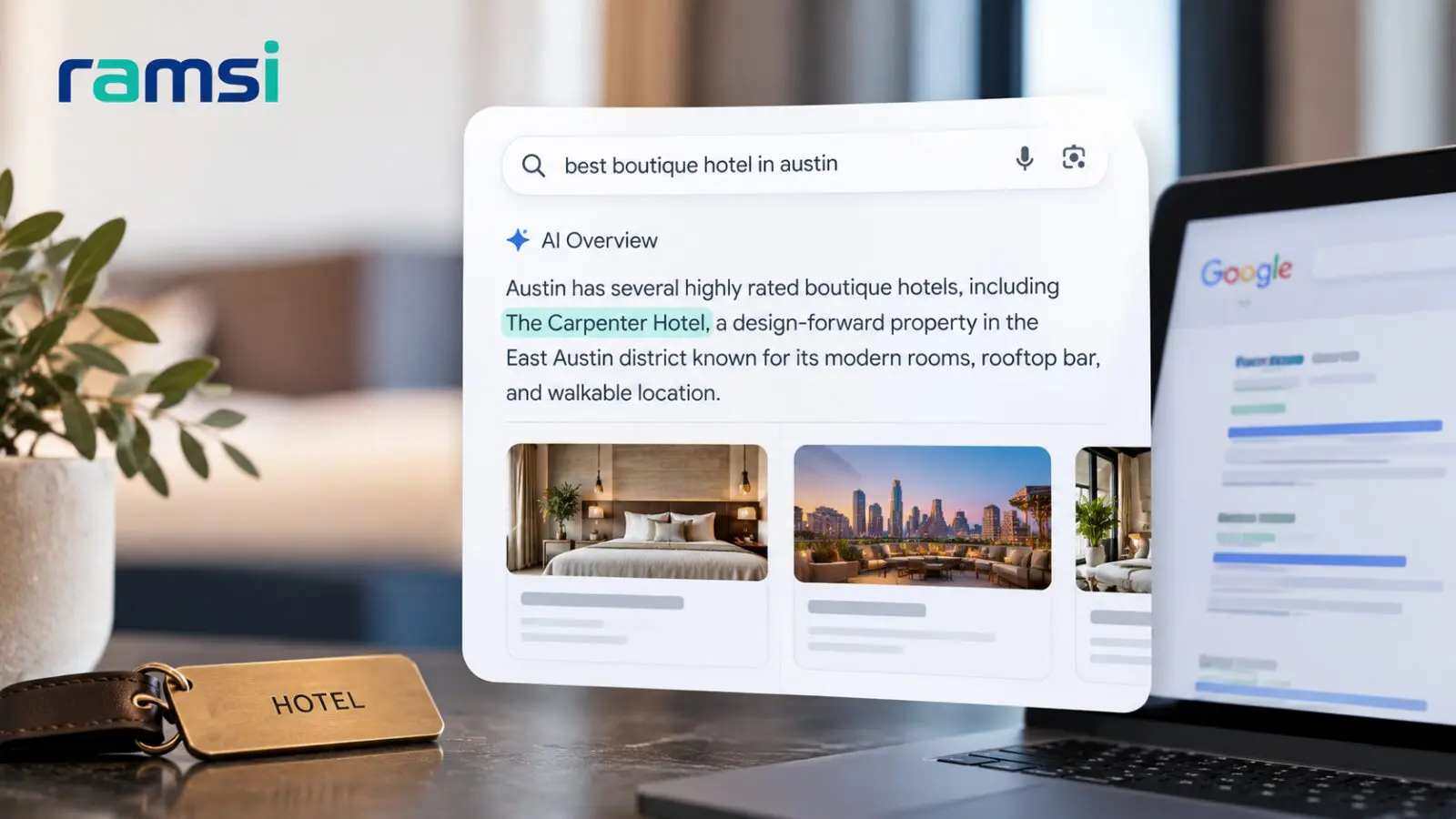
Here’s the assumption behind most hotel marketing budgets: rank on page one of Google, and you’re covered. Generative engine optimization exists to correct that. Ranking still matters. It’s just not the only game anymore. For a fast-growing share of searches, it’s not even the main one.
The Search That Replaced the Search
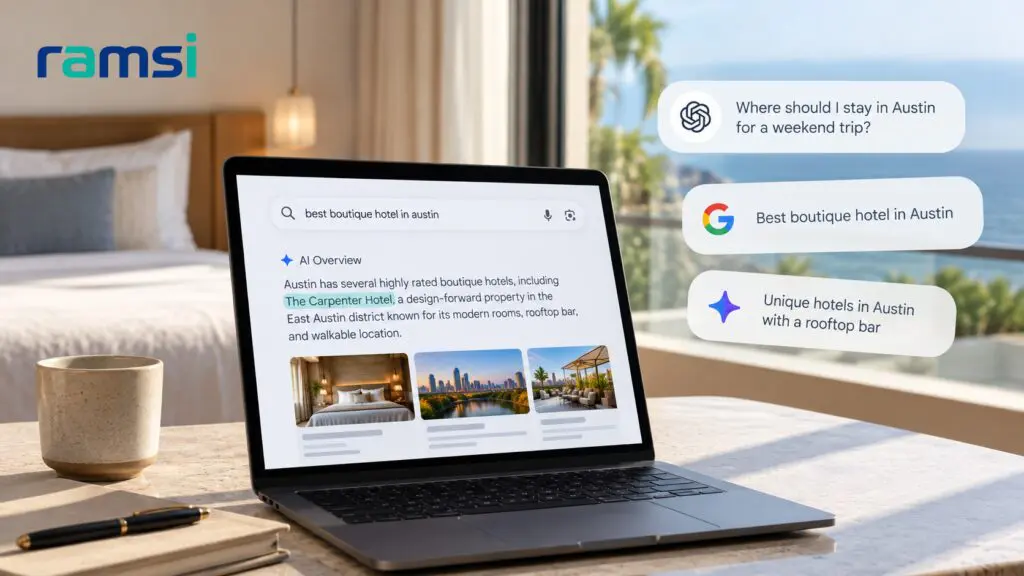
AI Overviews Are Already the Default
Google’s AI Overviews now appear on 86.7% of business-intent searches. A year ago, that number was 56.9% (Peec AI). “Best boutique hotel in [city]” is exactly that kind of query. So is “where should I stay for a weekend anniversary trip.” More broadly, 60% of all searches now end without a single click to any website (Bain & Company, via Peec AI). When an AI summary appears, people click through to a normal result only 8% of the time. Without a summary, that jumps to 15%.
Hotel Leadership Has Noticed
38% of hotel GMs now call “getting found inside AI answers” their top demand-generation priority for 2026. That’s more than any other strategy, per Amadeus’s Travel Dreams report (Hospitality Net). The same research found something else: 69% of travelers now trust an AI summary enough to decide without digging further.
What Generative Engine Optimization Actually Changes
SEO Competes for Rank. GEO Competes to Be Quoted.
Traditional SEO optimizes for a ranked list. You compete for position one through ten. Even position four still gets a look. Generative engine optimization plays a different game — an AI answer doesn’t hand the traveler a list, it hands them a conclusion. Hospitality Net put it well: “a search engine hands the traveler a list and lets them choose; an answer engine makes the choice and hands them a conclusion.” Miss the answer entirely, and there’s no page four to fall back on. You’re just not in it.
The Bar Is Already High
That shift changes what earns visibility. Generative engine optimization targets individual facts and passages, not a whole page built around one keyword. It rewards content that’s verifiable across independent sources — reviews, press mentions, directory listings, your own site, all agreeing. Backlink authority matters less here. Only 6.8% of U.S. websites earned any AI citation presence at all as of May 2026 (Similarweb). Showing up in even one AI answer already puts a hotel ahead of most sites AI never cites at all.
Where Most Hotel Sites Fall Short
Vague Copy Doesn’t Get Cited
None of this means abandoning SEO. It means adding to it. The gap is usually the same one Ramsi’s own visibility audit keeps finding. It’s copy that describes a feeling instead of a fact. “Unforgettable experiences” is a feeling. An AI model can’t quote it. “A 12-room inn two blocks from the harbor, built in a converted 1890s warehouse, with a rooftop bar open to guests only” is a fact. A model can quote that. Specificity is the raw material generative engine optimization runs on.
Inconsistent Facts Confuse the Model
The second gap is consistency. Your name, address, and room count can read differently across your website, Google Business Profile, and OTA listings. An AI model synthesizing all of them gets a conflicting signal instead of a reinforcing one. That matters more than it sounds: 15% of AI-skeptical travelers already worry these tools only surface what they already know. Consistent, well-documented facts about your property are the fix.
Where This Leaves Independent Hotels
You don’t need an enterprise marketing team to compete here. If anything, it’s the opposite. A specific, well-documented independent property has a real shot at being the exact passage a model cites. A generic chain page, competing on brand recognition alone, doesn’t automatically win the way it might in classic SEO rankings. See the 10-minute audit for checking where your hotel stands today →
Showing up in an AI answer and pricing the room right once someone finds you are two separate problems. They share one discipline, though. Both reward the property that keeps its information current, not the one that set it once and walked away. Ramsi handles the pricing half, reading demand daily instead of on whatever schedule someone gets to it. Generative engine optimization applies the same idea to how travelers discover you in the first place.
FAQ
What is generative engine optimization, in plain terms? It means making your hotel’s information easy for AI tools to find, verify, and quote directly — ChatGPT, Google AI Overviews, Perplexity. Traditional SEO optimizes a page to rank in a list of links. GEO optimizes a fact so an AI answer can quote it.
Is generative engine optimization replacing SEO, or working alongside it? Alongside it, for now. Traditional search still drives real traffic. But a growing share of queries — especially “best hotel in [city]” style searches — triggers an AI answer before any ranked list even appears. A hotel needs both.
How is generative engine optimization actually different from what SEO already covers? SEO competes for position on a ranked page. GEO competes to be the fact or passage an AI model quotes. Rank fourth in SEO, and people still see you. Miss the AI answer, and they don’t see you at all.
Do I need new software or a new team to do generative engine optimization? No. Start by rewriting vague marketing copy into specific, verifiable facts. Then make sure your name, address, and property details match exactly across your website, Google Business Profile, and OTA listings. It’s a content and consistency fix, not a new platform.
How rare is it for AI tools to actually cite a hotel website right now? Rare enough that just showing up matters. Only 6.8% of U.S. websites earned any AI citation presence as of May 2026. Most of your competitors aren’t doing this well yet either.
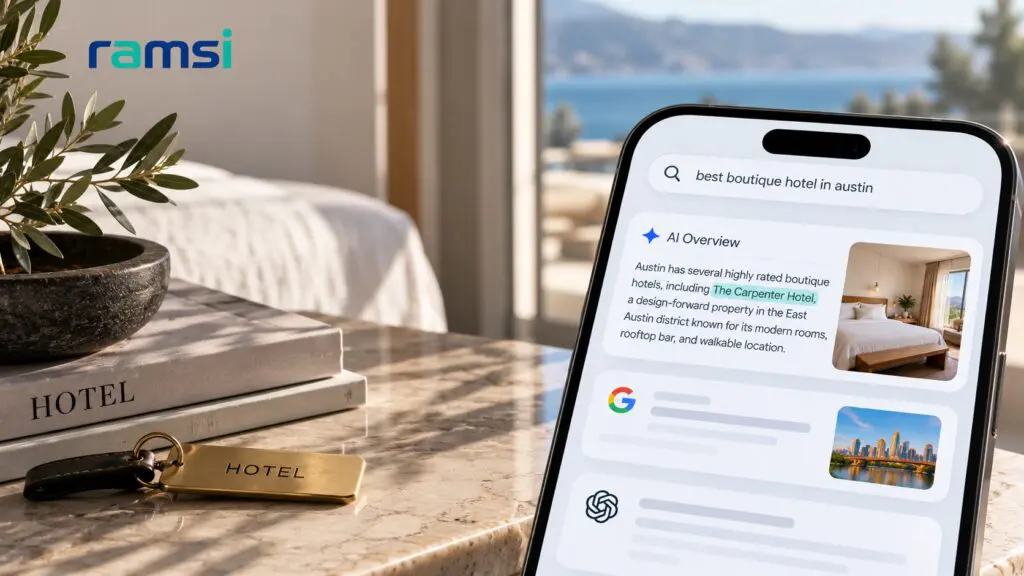
How do I check whether my hotel already shows up in AI answers? Ask ChatGPT or Google’s AI Overview a question a guest would actually type — something like “best boutique hotel in [your city].” Read what comes back. If your hotel’s missing, or the details are wrong, that’s where to start.